Showing posts with label Democracy. Show all posts

Friday, 1 December 2017

 Co-building an Erasmus+ made up European Union.

From 28th november to 1st dicember Europe HOpes have had the pleasure to support the direction of the project I.T.Y.I., International Training for Youth Integration, settled in Catania and funded wihin the Erasmus+ project.
Indeed, when we have co-written down this project it was astonishing thinking about the fact that many people, mostly unknown, would have travelled around Europe to a unique destination to meet each other, discuss, building theirselves, finding new friends and so many other things we couldn't imagine yet.

Monday, 23 November 2015

We, the Young European, are not afraid.

Author: Gabriella Arcifa

Brussels, November 21th - We, the young Europeans, didn't really know the war until late this autumn, autumn that looks already like winter. It is a different war from the ones we studied in the history books, It is the War of Terror.  Brussels on November 21, at our wake up, under the first snow flakes, we heard that the city is controlled by police and manned by soldier patrols. They are searching for terrorists. This people, young people like us, between 20 and 30 years, were born and educated in Europe, just like us. The media says that in Molenbeek the searches are still continuing and the houses are rounded up one by one.  Many people were arrested, others are underway. A small arsenal of weapons, including chemical was founded. And now, while we are reading news from the Belgian National Crisis Centre, it is worth remembering that we are here in Bruxelles "pour l'Europe unie" and that we are not at all discouraged!  Coming from different European cities, we started on November 12, our project "Be Ready 4 EU", organized by the Association Europe HOpes. We are 10 young European citizens, interested in understanding the European Union functioning and inform the European citizens about how and if an integration among different national states is indeed possible.   And, why not, if we, young Europeans, may have our say to influence the decision-making process at the Union level, as the professional lobbyists do here in the Big Apple of Europe. We were excited and happy before the evening of November 13, when the events in Paris left a “wound” on all of us and the whole democratic world. That night our sleep was restless and for the first time in our lives, at the wake up, we were afraid of war at our door steps!

Saturday, 21 November 2015

Noi, giovani europei, non abbiamo paura! Racconto di un impegno per l'Europa Unita.

Bruxelles, 21 novembre  -   Noi, giovani europei, non conoscevamo la guerra, almeno fino a questo tardo autunno che sa già di inverno. Oggi conosciamo una guerra diversa da quella studiata sui libri di storia, strategica, del terrore. Oggi al risveglio a Bruxelles, sotto i primi fiocchi di neve, abbiamo appreso che la città è controllata dalle forze dell'ordine, presidiata dall'esercito alla ricerca di Salah e dei suoi fiancheggiatori. Loro sono giovani come noi, hanno tra i 20 e i 30 anni, nati, educati! in Europa. I  media dicono che a Molenbeek continuano le perquisizioni nelle case, rastrellate una ad una e che è stato ritrovato un piccolo arsenale di armi, anche chimiche. Mentre leggiamo i comunicati dell'unità di crisi belga, vale la pena ricordare a noi stessi che siamo qui  "pour l'europe unie" e che non siamo affatto impauriti o scoraggiati. Partiti da diverse città europee, primo appuntamento il 12 novembre, per il training "Be  Ready 4 EU", organizzato dall'associazione Europe HOpes, 10 giovani europei vogliamo comprendere e comunicare l'Unione Europea ai suoi cittadini e scoprire se una integrazione tra diverse nazioni e sovranità è davvero possibile. E perché no, noi, questi giovani europei, vogliamo anche dire la nostra e influire sui processi decisionali a livello di Unione, come fanno i lobbisti di professione qui nella grande mela d'Europa.

Thursday, 2 July 2015

The EU Common Foreign and Security Policy (CFSP). A space for oligarchic decisions?


by Ettore Togni
 
Different identities, visions and interests among the EU Member States emerge from the EU Foreign and Security policy. Can be argued that, this circumstance jeopardises the achievement of the specific political objectives by the EU.  
Indeed, today the European Union holds  appropriate juridical framework and political tools to coherently act and address European and international issues, as recognised by the Treaty of the European Union (TUE), Title V . However, despite the main institutional and political progresses, the Foreign Policy of the European Union is strongly undermined by two main factors that are mutually influenced.
First: under the current legal framework, the European Council - the highest decision-making body of the EU composed by the head of the state and government of the 28 member states -  requires unanimity when deciding on Common Security and Defence Policy. Thus, any country can exercise its veto and undermine a common action. In practice, usually happens that unanimity is more likely to be perceived if at least, the so called “Big Three” (UK, France and Germany)[1] are politically agree to promote foreign and security actions and can thus influence the other “minor” member states.  

Wednesday, 19 November 2014

Grillo in Brussels: A referendum to leave the euro

from news.xinhuanet.com
by Marco Quaglia

Brussels - On 12 November, the morning at the European Parliament was more animated than usual. Beppe Grillo, the outspoken leader of the Five Stars Movement, hold a press conference to present the much anticipated proposal for an Italian referendum to abandon the euro. However, as it is often the case, especially for the Italian mainstream media, the main event of the whole conference according to televisions and newspaper seemed to be its ending.

Friday, 14 November 2014

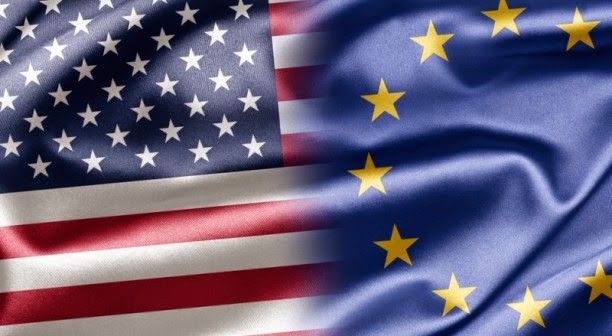
The European Parliament discusses the Translatlantic Trade Agreement and Investment Partnership

picture from www.euintheus.org
by Marco Quaglia


On 5 November 2014, it was held for the first time under the Juncker's Presidency European Parliament (EP) Committee on Industry, Research and Energy (ITRE). Among many topics, the Transatlantic Trade and Investment Partnership (TTIP) was discussed. Under this acronym it lies the free trade agreement that will change dramatically the economic relations between the European Union (EU) and the United States (US).


What is the aim of the TTIP?